
Coffee Machine With Grinder: Built-In or Separate?
Should you buy a coffee machine with grinder, or invest in a separate machine and grinder? Both options work well, and the right choice depends on your budget, how involved you want to be in espresso preparation, and whether you prioritise convenience or control.
Some people want a simple morning ritual. Others want to dial in every variable like a barista. Neither approach is wrong; they just lead to different equipment choices.
KayRin Coffee Roasters is a Cape Town roastery that sells both espresso machines and grinders and works with this equipment every day, helping customers match equipment to their skill level and coffee goals.
Why Does the Grinder Matter So Much for Espresso?
The grinder determines grind particle size and consistency, which directly controls how evenly water extracts flavour from the coffee under pressure.
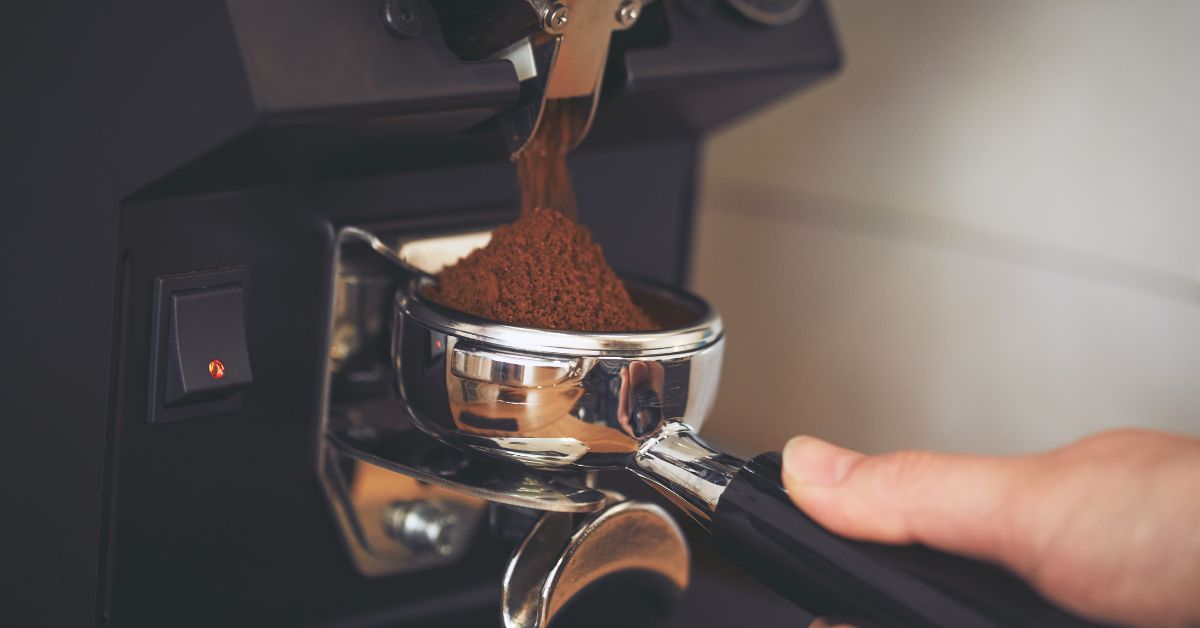
- The extraction window is narrow: Espresso extraction happens in 25 to 30 seconds under pressure, requiring grind particles in the 200 to 400 micron range. A grinder that cannot consistently produce this range becomes the limiting factor, regardless of how good the machine is.
- Inconsistent particles throw off extraction: When grind particles vary, water flows unevenly through the coffee puck. Smaller particles over-extract and turn bitter, while larger particles under-extract and taste sour.
- Grinder quality outweighs machine quality: A better grinder paired with a modest machine will often outperform a great machine paired with a poor grinder. This is a well-established principle among espresso professionals.
- Burr design drives performance: A blade grinder chops beans randomly, creating uneven fragments. A burr coffee grinder crushes beans between two calibrated surfaces, producing far more uniform particles and better extraction control.
- Burr size matters too: Larger burrs, typically 55 mm to 65 mm, produce more uniform particle sizes and generate less heat during grinding, which improves both flavour clarity and consistency in the cup.
What Are the Advantages of a Coffee Machine With a Built-In Grinder?
A coffee machine with a grinder offers maximum freshness, convenience, and a smaller footprint, making it a strong choice for buyers who prioritise simplicity.
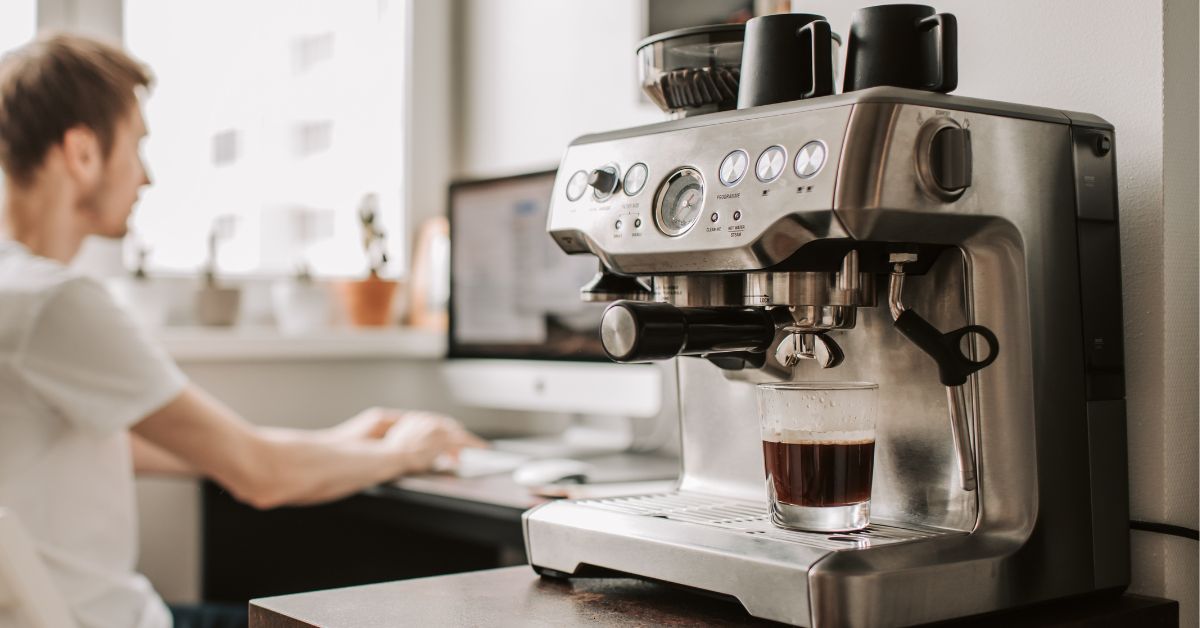
- Freshness: Grinding directly into the portafilter immediately before extraction is considered the gold standard for espresso. Once coffee is ground, it begins to oxidise within minutes, causing aromatic compounds to degrade. A built-in grinder eliminates the delay by grinding and brewing in a single integrated system.
- Convenience: A built-in grinder means one machine, one workflow, and fewer steps in the brewing process. There is less to learn, fewer variables to manage, and less equipment to clean. For busy households or office environments, this simplicity makes daily use far more accessible.
- Reduced counter space: Instead of two separate units, everything is contained in a single footprint, which is especially valuable in smaller kitchens or shared spaces.
At entry level, a combined machine can also be more cost-effective than purchasing a separate espresso machine and grinder of equivalent quality. This allows buyers to access a complete espresso system at a lower total upfront investment.
Quality integrated grinders from reputable manufacturers can produce excellent espresso when properly dialled in.
What Are the Advantages of a Separate Espresso Machine and Dedicated Grinder?
A dedicated espresso machine paired with a separate grinder offers greater grind control, stronger performance at mid- to high-price points, and more flexibility to upgrade or repair each component independently.
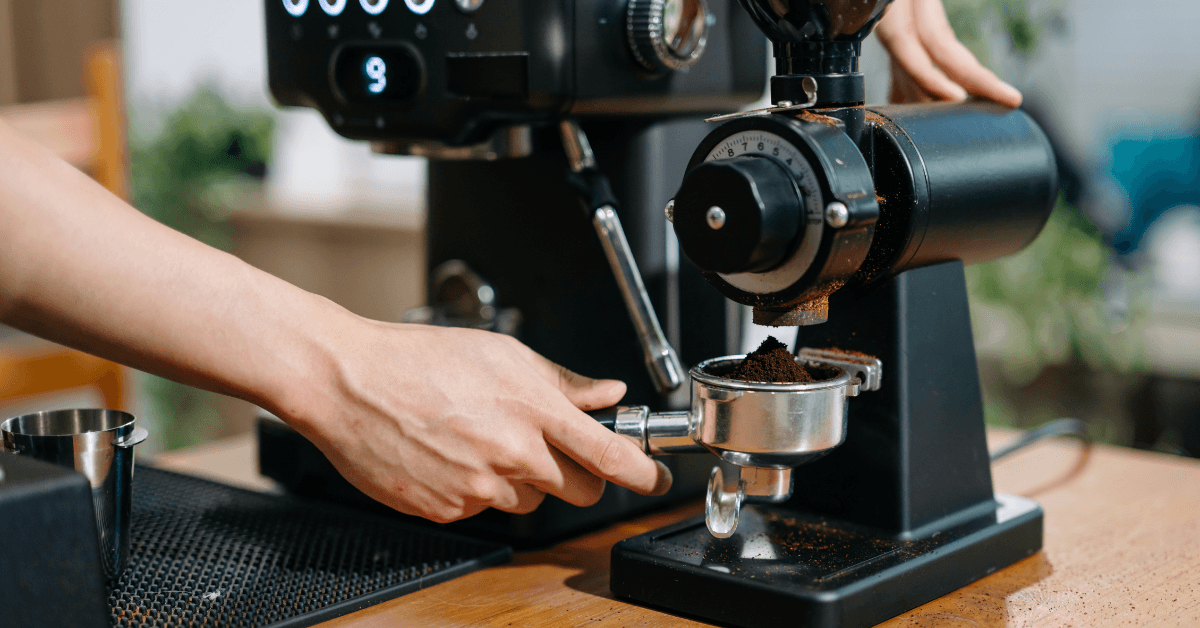
- Grind control is the most immediate advantage: Dedicated grinders at equivalent price points typically offer larger burr sets, stepless grind adjustment, and greater calibration precision than integrated grinders at the same cost. This level of control is essential when dialling in espresso consistently over time.
- A separate grinder is also more versatile: One grinder can be used for espresso in the morning, pour over at the weekend, or French press when brewing for guests. A built-in grinder is usually locked into espresso-only use, which limits flexibility.
- The upgrade path is another major advantage: As your skills improve, you can upgrade the grinder without replacing the machine, or vice versa. Integrated systems must be replaced entirely to improve performance.
- Repairability is also simpler: Machines and grinders wear at different rates, and with separate units, servicing one does not take your entire setup offline. If an integrated system needs repair, you lose access to both grinding and brewing until it returns.
At mid- to high-price points, performance ceilings become especially important. A matched pairing of dedicated machine and grinder consistently outperforms integrated systems at comparable total spend.
The SCA’s Semi-Automatic and Automatic Espresso Machines standard (SCA-350) sets the industry specifications and test methods that espresso machines are measured against, covering things like temperature stability and consistency of output. It’s a useful benchmark for understanding why machine quality alone isn’t the full picture: a machine can meet every spec on that standard and still be let down by a mismatched grinder.
If you’re exploring an espresso coffee machine, pairing it with a dedicated grinder gives you more room to grow into your equipment rather than outgrowing it.
What Is the Best Coffee Machine and Grinder Pairing for My Budget?
The best coffee machine with a grinder pairing depends on your total budget, but the general rule is that a balanced setup will always outperform an uneven one where either the machine or grinder is significantly weaker.
This section breaks down real KayRin pairings so you can see exactly what works well together at each level. The goal is to help you build a setup that functions as a complete system, not just individual parts.
Entry Level: What Is the Best Coffee Machine and Grinder Setup Under R10,000?
The best entry-level espresso setup under R10,000 is the Gaggia Espresso Evolution, available for R5,495, paired with either a budget burr grinder or a manual grinder, depending on how much control and effort you want.
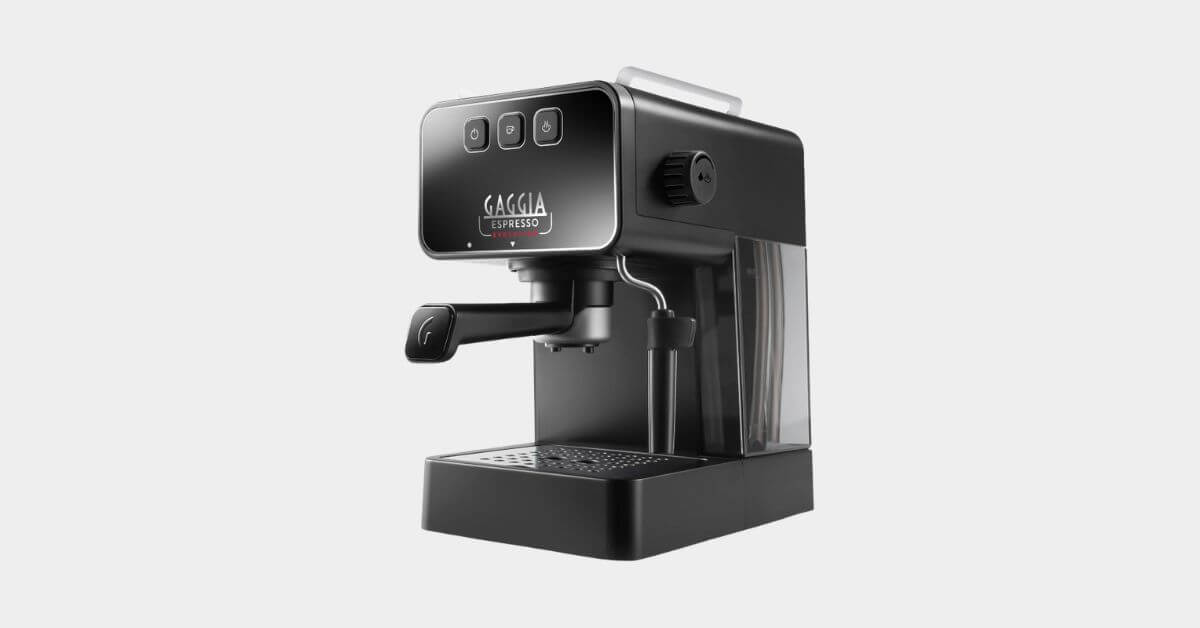
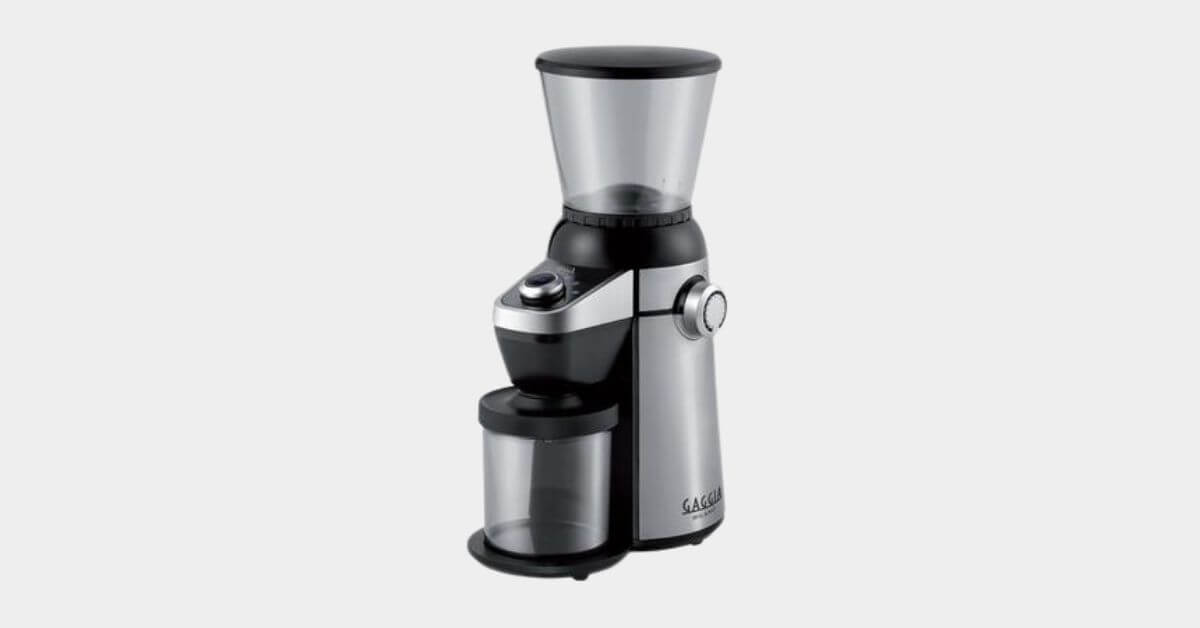
The Gaggia MD15, sold for R3,495, is a simple electric burr grinder designed for entry-level espresso use, offering grind quality consistent enough to learn proper extraction. With the Gaggia Espresso Evolution, the total is R8,990.
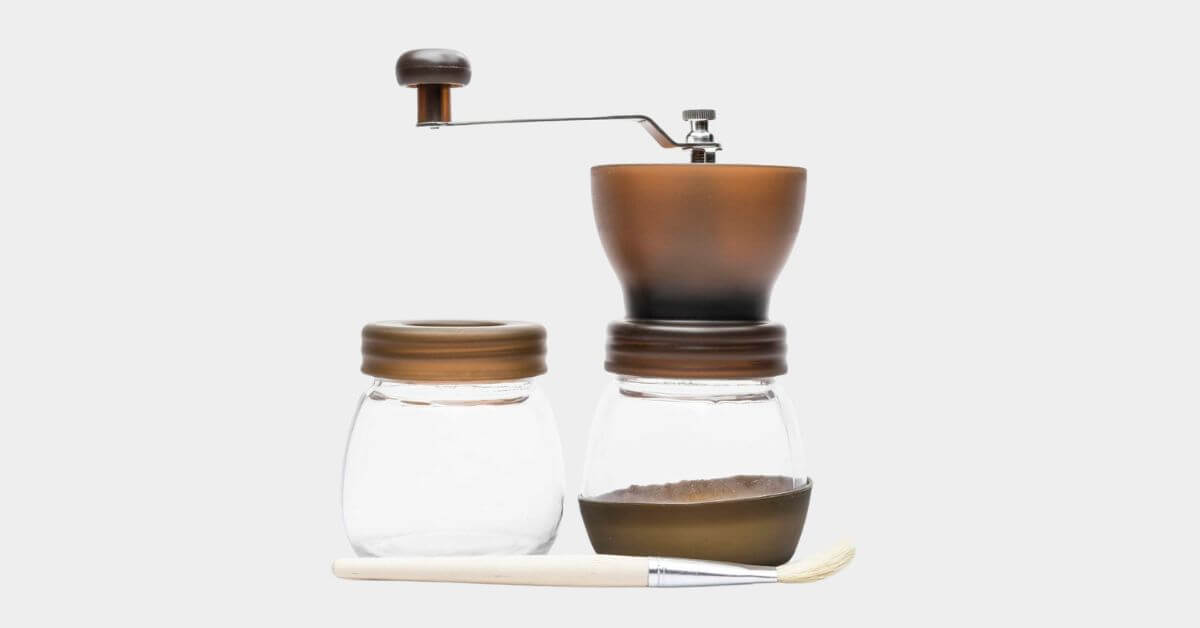
The Brewtool Hand Coffee Bean Grinder, priced at R399, is a manual burr grinder that requires more effort but keeps the total cost extremely low while still giving control over grind size. With the Gaggia Espresso Evolution, the total is under R6,000.
This tier is focused on learning espresso fundamentals such as dose, grind adjustment, and timing rather than chasing perfection.
Best for: first-time espresso buyers who want to learn without a large upfront investment.
Mid Range: What Is the Best Coffee Setup Between R20,000 and R30,000?
The best mid-range espresso setup combines a Lelit machine with a dedicated burr grinder, giving you noticeably more control over extraction, consistency, and flavour clarity.
The Lelit Anna PID, available for R14,995, or the Lelit Victoria, available for R18,995, are both strong mid-range machines with excellent temperature stability for home barista use.
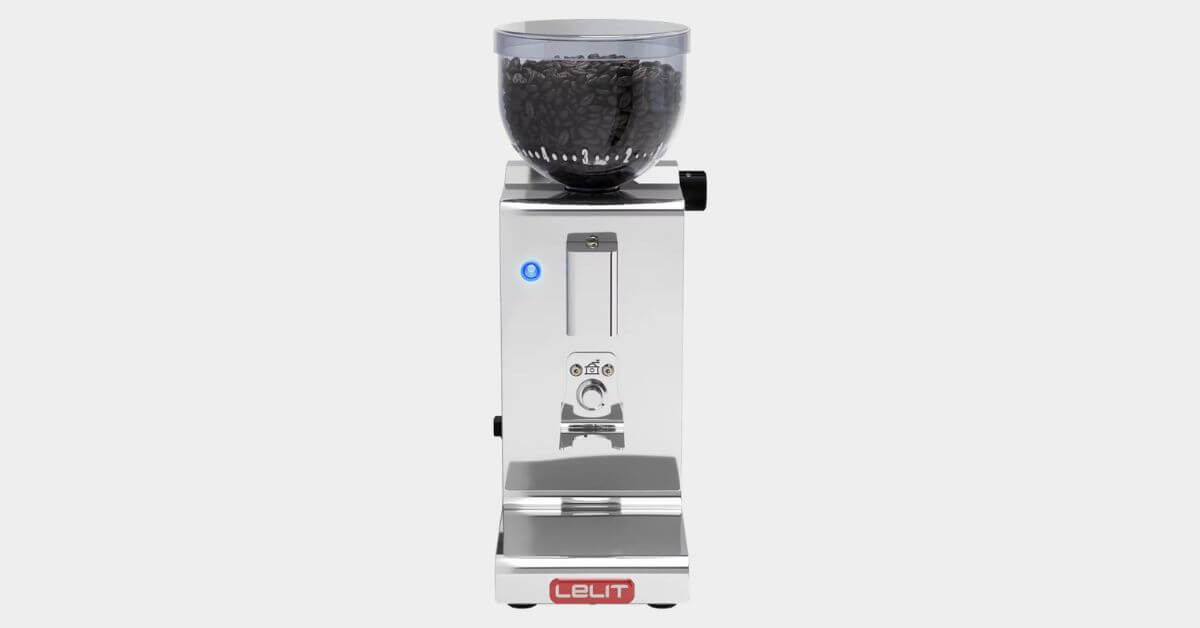
The Lelit Fred 44, priced at R7,495, is a stepless burr grinder that offers precise grind adjustment, making it easier to dial in espresso consistently. With the Anna PID, the total is R22,490; with the Victoria, it is R26,490.
Best for: serious home baristas who want to dial in their espresso and develop real control over their technique.
Prosumer Level: What Is the Best High-End Coffee Setup Between R45,000 and R85,000?
The best prosumer espresso setup pairs a Lelit Mara X or Bianca V3 with a commercial-grade grinder, delivering café-level performance at home or in small office environments.
The Lelit Mara X, available for R30,995, or the Lelit Bianca V3, priced at R54,995 to R63,995, offer high-end temperature stability and extraction control suited for advanced users.
The Macap MI20 Touch, which costs R14,995, and the Macap MI40 Touch, which sells for R19,995, are commercial-grade grinders with stepless adjustment and on-demand dosing for maximum consistency.
With the Mara X and Macap MI20 Touch, the total is R45,990. With the Bianca V3 and Macap MI40 Touch, the total ranges from R74,990 to R83,990.
At this level, the grinder becomes the primary driver of flavour clarity, consistency, and workflow efficiency rather than just a supporting tool.
Best for: buyers who want a home setup that genuinely competes with a speciality café.
Home and Office Use: What Is the Best Coffee Machine Setup for High Volume Brewing?
The best high-volume espresso setup for home or office use is a durable machine paired with a high-output grinder designed to maintain consistency across repeated daily extractions.
Regarding machines, the Magic M1, sold for R42,999, or the Gaggia Classic GT Dual Boiler, available for R34,995, are built for stability and repeatable performance under heavier use.
The Macap MI40 Touch, priced at R19,995, is a high-output grinder designed for speed, low retention, and consistent dosing during back-to-back shots.
This category prioritises reliability and workflow efficiency over experimentation, ensuring consistent results throughout the day.
Best for: offices, shared households, or serious home users making multiple coffees daily.
How Much Should I Spend on a Grinder Compared to My Espresso Machine?
A widely used rule of thumb among espresso professionals is to spend roughly 50-70% of your machine budget on the grinder.
This matters because the grinder determines particle size consistency, which controls how evenly water flows through the coffee puck during extraction. Underinvesting in the grinder while overspending on the machine is one of the most common mistakes first-time espresso buyers make, often resulting in poor balance and inconsistent shots.
In practice, this means buyers should think of their setup as a system in which the grinder exerts a disproportionate influence on performance. Entry-level setups like the Gaggia Espresso Evolution and Gaggia MD15 demonstrate this balance, while mid-range and prosumer pairings such as the Lelit Victoria with the Lelit Fred 44, or the Lelit Bianca V3 with the Macap MI40 Touch, show how investment becomes more evenly distributed as performance expectations increase.
This rule applies specifically to dedicated espresso machine-grinder pairings. With integrated machines that include a built-in grinder, the cost balance is already internalised, so the ratio becomes less relevant.
Does the Bean Matter as Much as the Machine and Grinder?
Yes, the coffee bean matters just as much as the machine and grinder because even the best equipment cannot compensate for stale or poorly sourced coffee.
Freshly roasted beans extract more evenly and produce better clarity, sweetness, and balance in the cup. Once coffee has been sitting for weeks or months after roasting, it loses aromatic compounds, resulting in a flat, muted espresso regardless of the setup.
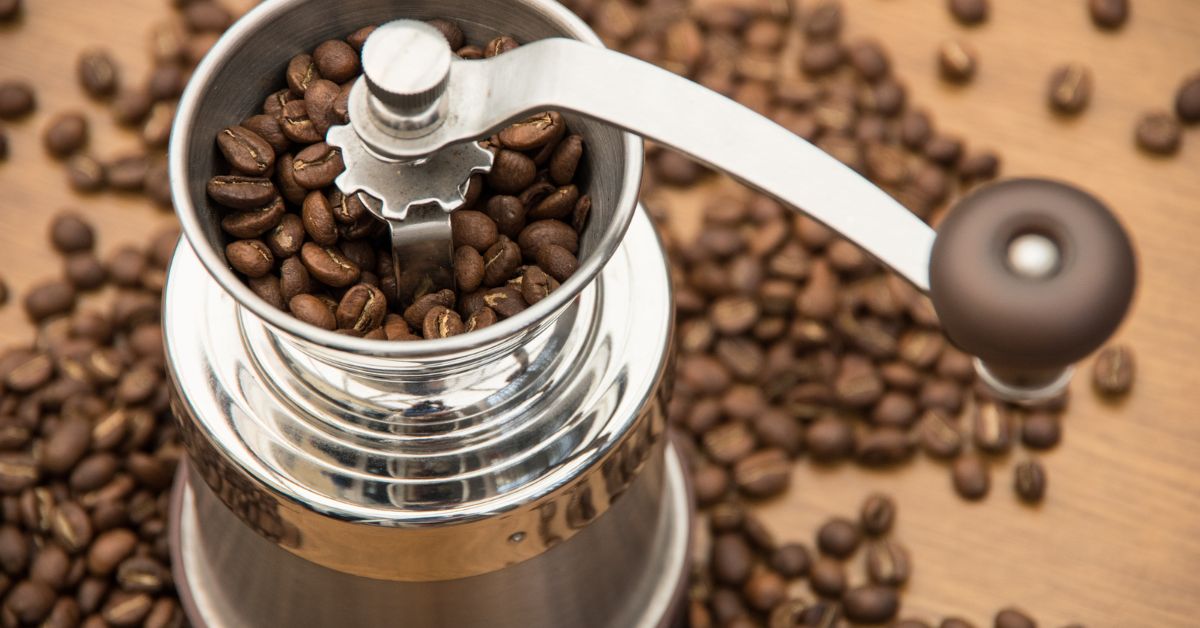
Beans stored on supermarket shelves or in warehouses for extended periods typically lack the freshness needed for proper espresso extraction, even when paired with high-end equipment.
KayRin Coffee Roasters produces freshly roasted coffee in small batches in Cape Town, ensuring the beans are used close to peak freshness. This aligns the entire setup from roasting to grinding to brewing.
Which Setup Should You Choose?
Both a coffee machine with a built-in grinder and a separate espresso machine with a grinder are legitimate options. The best choice depends on how you make coffee, what your budget allows, and how much you want to engage with the craft of espresso.
As a Cape Town roastery that stocks both machines and grinders, KayRin Coffee Roasters can help you choose the right pairing for your budget and use case.
Frequently Asked Questions About Coffee Machines With Grinders
Should I buy a coffee machine with a built-in grinder or a separate grinder?
It depends on your priorities. If you want convenience, speed, and a compact setup with minimal learning curve, a coffee machine with a grinder is a strong choice. If you want greater grind control, better precision, and the ability to upgrade your machine and grinder independently over time, a separate espresso machine-grinder pairing offers more long-term flexibility.
Is a separate grinder better than a built-in grinder?
At equivalent price points, a dedicated burr grinder typically offers larger burrs and more precise stepless adjustment than a built-in equivalent. However, built-in grinders from quality brands offer genuine freshness advantages by grinding directly into the portafilter with zero delay, which can improve aroma retention and espresso quality.
What is the best coffee machine and grinder pairing in South Africa?
At the entry level, the Gaggia Espresso Evolution paired with the Gaggia MD15 is a natural, well-matched combination. In the mid-range, the Lelit Anna PID paired with the Lelit Fred 44 is a strong pairing. At the prosumer level, the Lelit Bianca V3 with the Macap MI40 Touch is one of the most capable home espresso setups available in South Africa.
How much should I spend on a grinder for my espresso machine?
Espresso professionals typically recommend spending 50 to 70% of your machine budget on the grinder. The grinder is where extraction quality is determined, and underinvesting in it while overspending on the machine is one of the most common mistakes first-time espresso buyers make.
Which grinder pairs best with a Gaggia espresso machine?
The Gaggia MD15 is the best match for the Gaggia Espresso Evolution because it is designed to deliver consistent espresso grind quality at an entry level. For higher-performance machines like the Gaggia Classic GT Dual Boiler, grinders such as the Macap MI20 Touch or Ares OD Touch offer the precision and consistency needed to fully support the machine’s capabilities.
Can I use any grinder with any espresso machine?
Yes, most espresso machines and grinders are compatible across brands, as long as the grinder produces a fine, consistent espresso-level grind size. While cross-brand setups are common, matched pairings from the same manufacturer can simplify setup and calibration, which is particularly helpful for beginners getting started with espresso.